
Signs of Termites in Antelope Valley Properties
Learn which clues suggest drywood or subterranean termites and what a proper inspection should clarify.
Call (661) 385-2297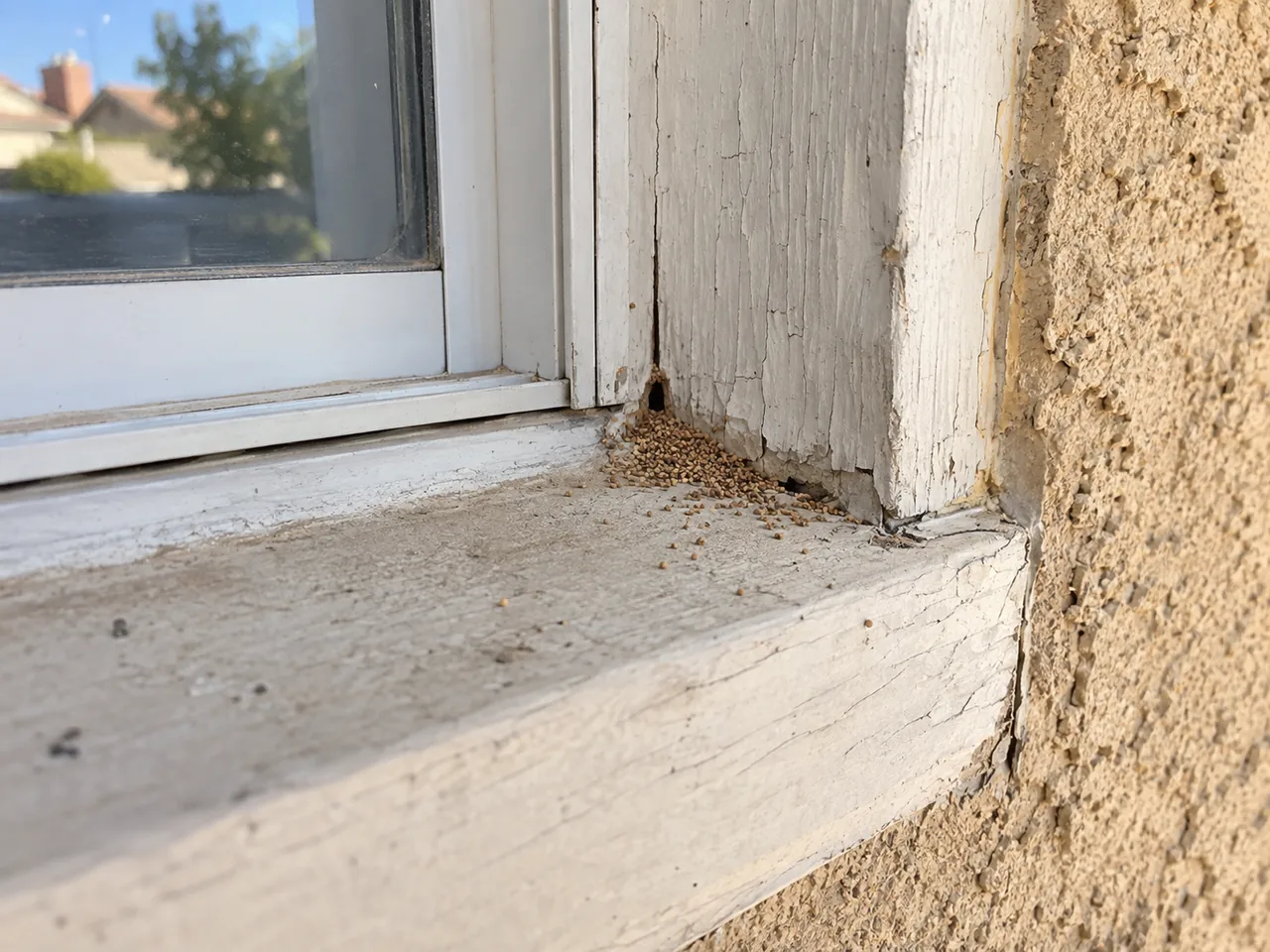
A little pile beneath a window frame can start a big question: termites, another insect, or ordinary building debris? The answer matters because drywood and subterranean termites live differently and can call for different inspections and treatment plans. No single photograph reveals how far activity extends inside concealed wood.
Compare the clues
Drywood termites may push small, hard pellets out of tiny openings in wood. Subterranean termites may build shelter tubes that connect soil and a structure. Discarded wings can appear after a swarm, but winged ants can be confused with termites. Damaged wood, peeling paint or a hollow sound are reasons to investigate, not stand-alone proof of a particular pest.
What to record before cleaning
Photograph the material and the exact spot where it appears. Note whether fresh material accumulates again and whether you have seen winged insects, tubes or moisture issues nearby. Keep previous reports and repair records. Avoid destroying the evidence or treating an unidentified opening before an inspection, especially if a property sale is underway.
What to ask an inspector
Ask which accessible areas were inspected, what evidence was found, which areas could not be viewed, and how the proposed work corresponds to the identified termite type. A California wood-destroying organism report has a specific role in a transaction; a quick visual opinion is not automatically the same document. Whole-structure fumigation is one possible option for some drywood termite situations, not an automatic answer to every suspected sign.
For a Palmdale property in our four covered ZIP codes, bring the location, photographs and any prior WDO report to the first conversation. The Antelope Valley title describes regional pest context; it does not expand our service area.
UC IPM: drywood termites · UC IPM: subterranean termites · California WDO report search.
Questions homeowners ask
Can I tell drywood from subterranean termites by damage alone?
Not reliably from a casual look. Pellets and soil-connected shelter tubes are different clues, but other insects or building debris can confuse the picture. A qualified inspection should identify the evidence, termite type and any areas that could not be examined.
Does a seller always need to fumigate before closing?
No. A transaction may need a wood-destroying organism report or specific work, but fumigation is not the default for every finding. Review the actual report, the proposed treatment and the buyer or lender requirements with the appropriate professionals before deciding on a scope.
Explore termite inspection and treatment ↗
Check your service location
Service coverage is limited to 93550, 93551, 93552 and 93591 only. Confirm your address and appointment arrangements when calling.
Tell us what you’re seeing.
Available 24/7. Call to discuss your pest concern and appointment availability.